
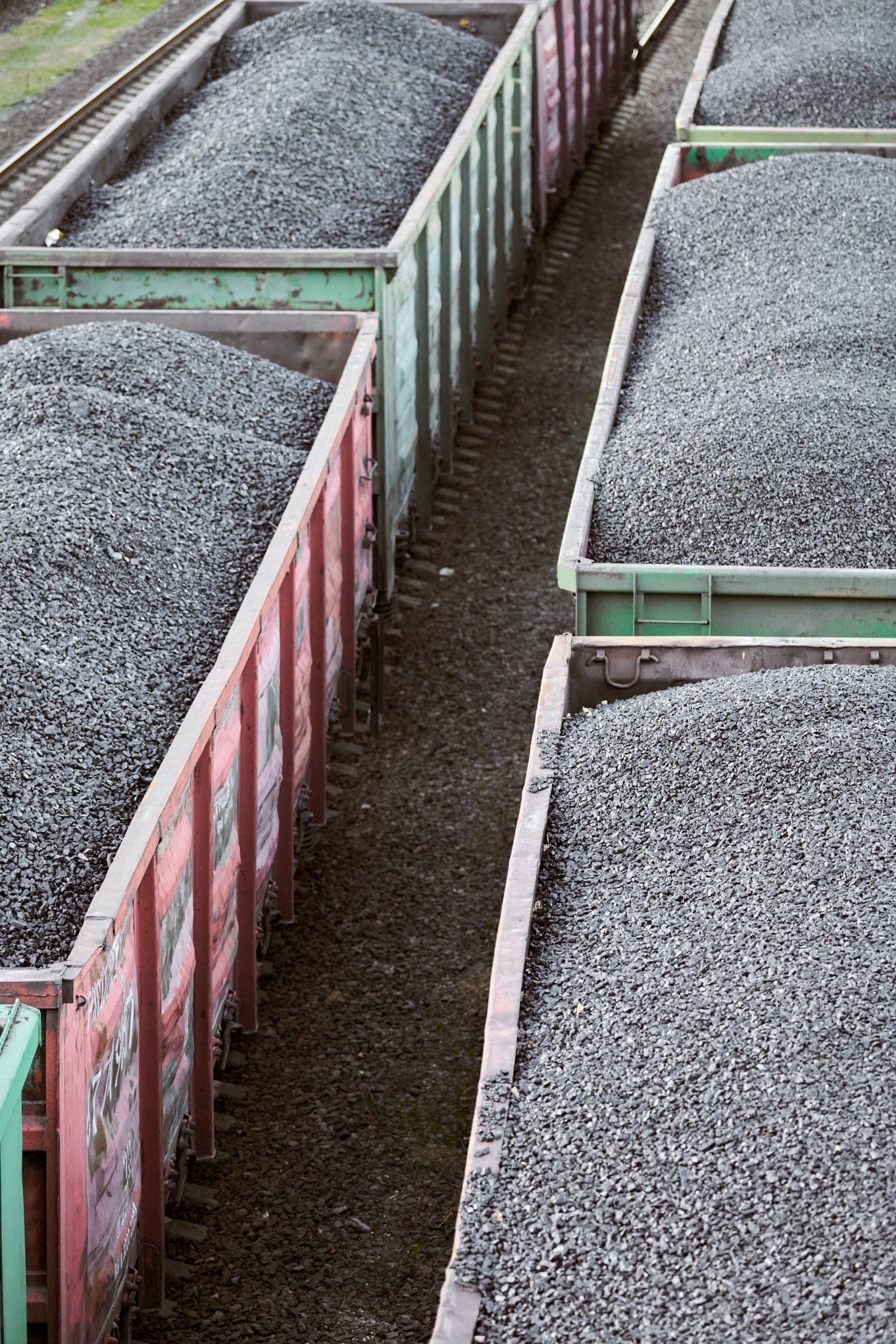
Run the rail leg and the truck leg on one record.
The car arrives through one system. The truck is dispatched from another. Your terminal is where the two physically meet, and it is exactly where the data stops matching. Rebulk keeps both legs of the same shipment on one operating record.
Why it happens
Nobody owns the middle of the shipment
The disconnect is not a discipline problem. It is structural: the rail leg and the truck leg were never recorded in the same place.
The two legs live in two systems
Railcar data arrives from Class I portals and railroad emails. Truck data lives in dispatch. Neither system knows the other exists, so somebody in the middle keeps a sheet that joins them by hand.
The handoff happens on the ground, not in software
The transfer from railcar to trailer is the event that matters, and it usually gets written on paper first. Inventory, documents, and billing are all copies of that copy.
Both sides guess at timing
Rail ops knows a car is coming. Dispatch knows a truck is booked. Without a shared picture, trucks show up for cars that aren't ready and crews work cars nobody is waiting on.
Billing sees two shipments
The transload charge and the truck movement get invoiced from separate data. Closing one customer's month means matching two sets of numbers that were never built to agree.
Sizing the rail-to-truck leg? Model railcars, trucks, and transfer rates for a lane with the free rail transload planner.
How Rebulk solves it
The terminal record holds both legs
Rebulk Transload is the record where the two legs meet. The inbound car, the transfer, the scale ticket, the outbound load, and the paperwork land on the same shipment as the work happens, not after it.
Track & Trace covers the rail side before the car ever arrives: release, ETA, placement, and per-car dwell. The truck side runs inside Transload: scheduling, check-in, loading, scale tickets, and shipment completion.
- Inbound car and outbound load on one shipment
- Scale tickets attach to the movement they measured
- BOLs and waybills file against the right car
- One set of billing line items, both legs
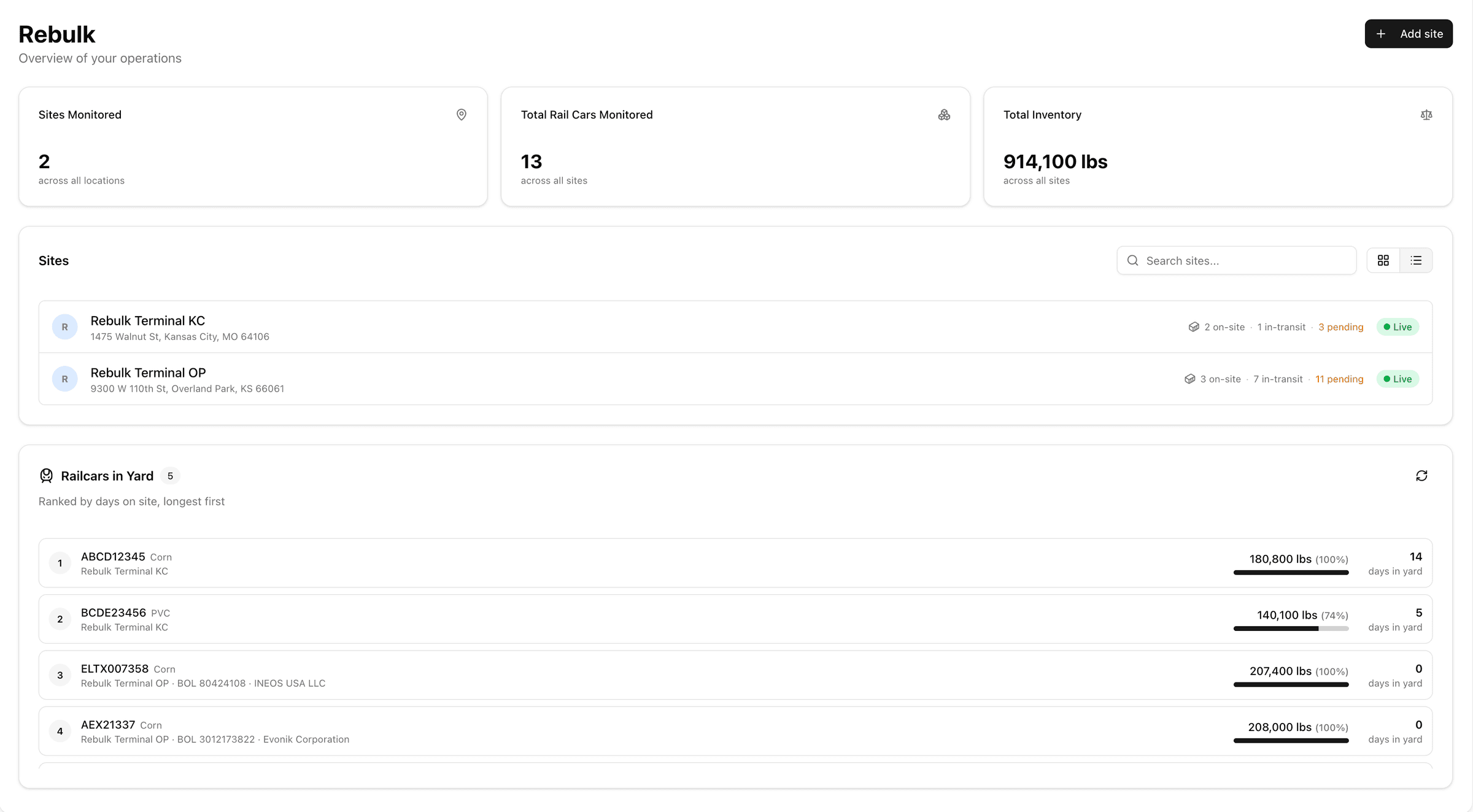
Products involved
Two products carry this today. A third is coming.
Run rail and truck legs of the same shipment in one system instead of two.
Where the legs meet
The rail side, before arrival
The rail-and-truck handoff runs today on Rebulk Transload and Rebulk Track & Trace — both live and in production at bulk terminals.
The workflow
One shipment, from release to invoice
The same record carries the car in and the truck out. No rekeying at the handoff.
- 1
Car released
Track & Trace picks up the inbound car at origin, with customer, commodity, and ETA.
- 2
Car placed
Arrival, track, and spot land on the terminal record. The dwell clock starts on its own.
- 3
Truck scheduled
Outbound loads get booked against cars that are ready to work, not cars that might be.
- 4
Transfer recorded
The move from railcar to trailer is captured where it happens, weights and scale tickets attached.
- 5
Shipment closed
The outbound BOL and the inbound waybill belong to the same shipment, not two filing systems.
- 6
One invoice
Transload work, storage, and demurrage come off the same record. Nothing gets reconciled twice.
Proof
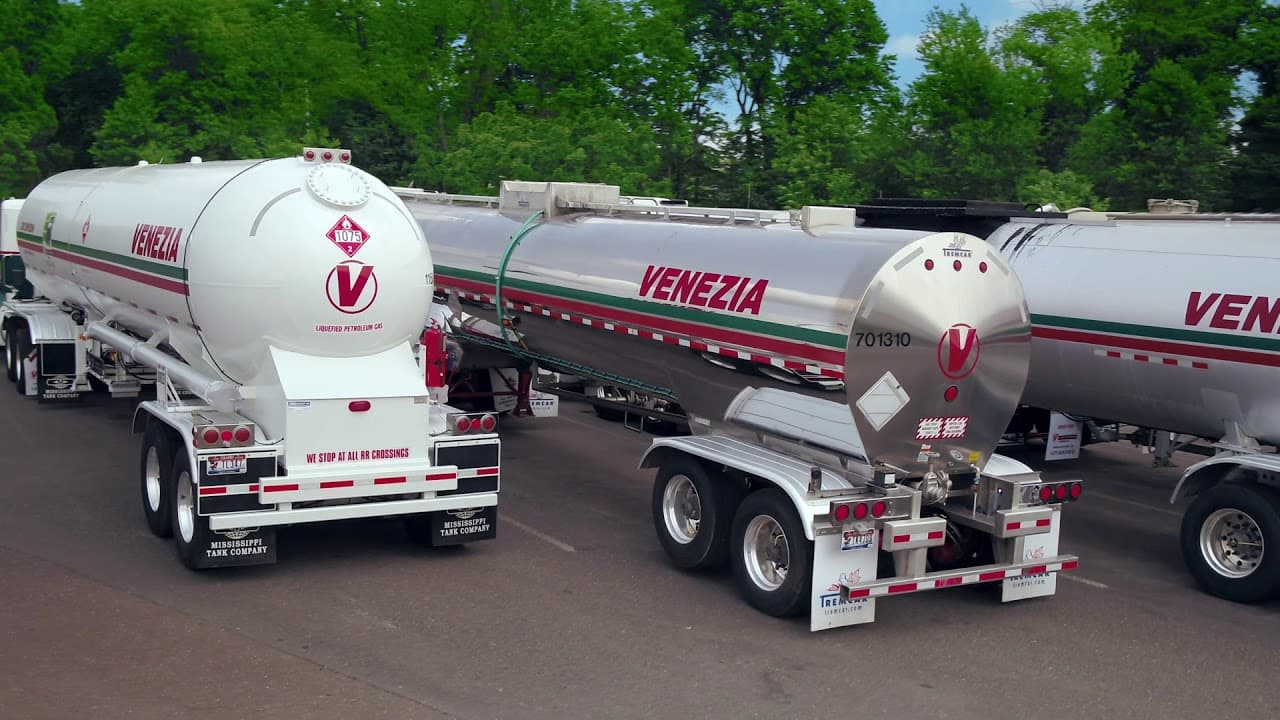
Venezia runs trucks and railcars on the same record
Venezia Transport moves bulk with 700+ trucks and 1,800+ trailers across 21 terminal locations, with railcars and transloading in the middle of it. Rebulk brought that work onto one record that operations and billing both read from.
Read the Venezia story“Rebulk has made it easier for us to manage the operation. We have better visibility, less manual tracking, and a faster way to connect tracking, transloading, and billing.”
Usher Transport runs the same handoff on the hazmat side, transloading between railcars and tank trailers. Read the Usher story.
See both legs on one record
Walk us through how a car and a truck meet at your terminal today, including the sheet in the middle. We'll show you the same handoff running on Rebulk, configured around your tracks, commodities, and billing terms.