
The Operating System
for Rail and Bulk Operations
One system for the railcars, trucks, inventory, documents, and billing behind your operation.
Who runs on Rebulk
Real terminals, real railcars, real invoices.

“Before Rebulk, we were spending too much time chasing information and then manually inputting it. Now we can see what is happening across the operation much faster.”
Frank Venezia · Director of Operations, Venezia Transport
700+ trucks · 1,800+ trailers · 21 terminals · 11 states
The Rebulk Platform
One platform. Every part of the operation.
Five products that each stand on their own. Connect them and the same operating record follows the material from the rail network to the invoice.
Connected workflow
Built around the way rail operations actually work.
Follow one railcar from the network to the invoice. Every step is handled by a Rebulk product, and every step writes to the same record — so nothing gets keyed in twice.
The car is released and moves across the Class I network. Trace data and ETAs come back before it reaches you.
Constructive placement is recorded the moment the car hits your track, and the dwell clock starts on the same record.
The car gets a track assignment and a place in the switch plan, so the next move is decided before the crew goes out.
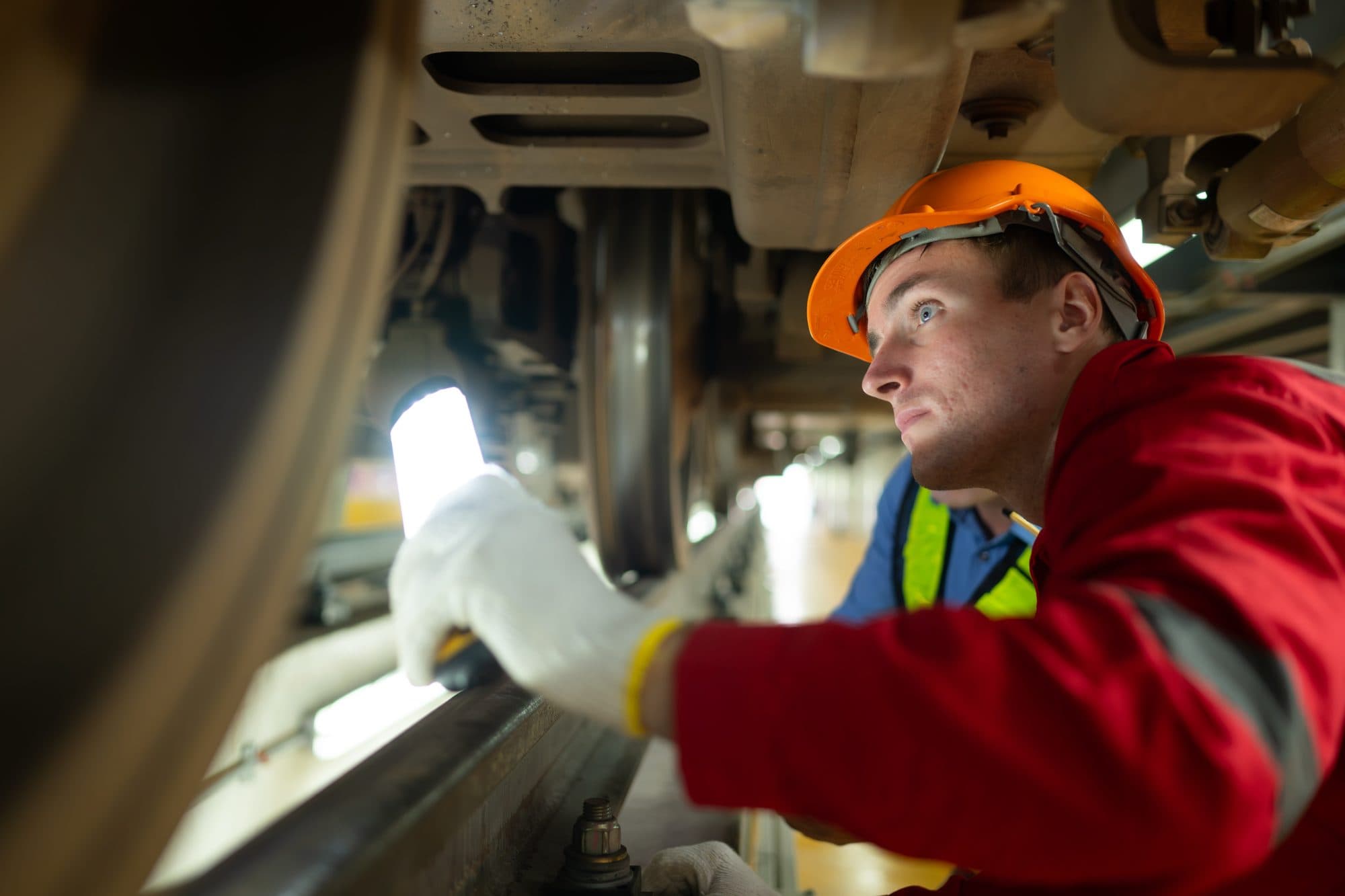
Inspections, defects, repairs, labor, and parts are logged against the car instead of a clipboard.
Product moves from rail to truck. Quantities, scale tickets, BOLs, and hazmat paperwork attach to the car as the work happens.
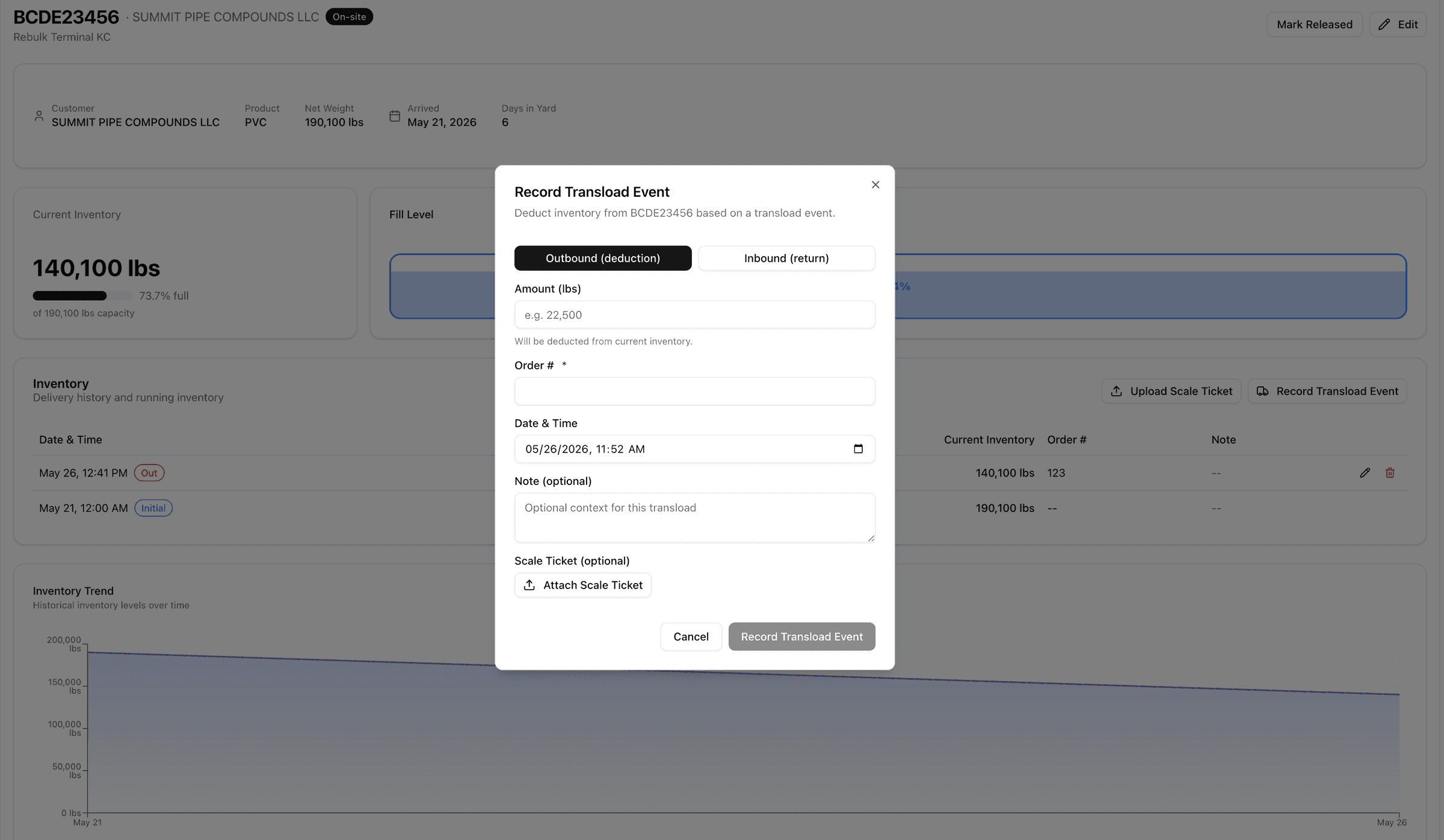
Measured quantities update by commodity, customer, and location — no separate reconciliation pass.
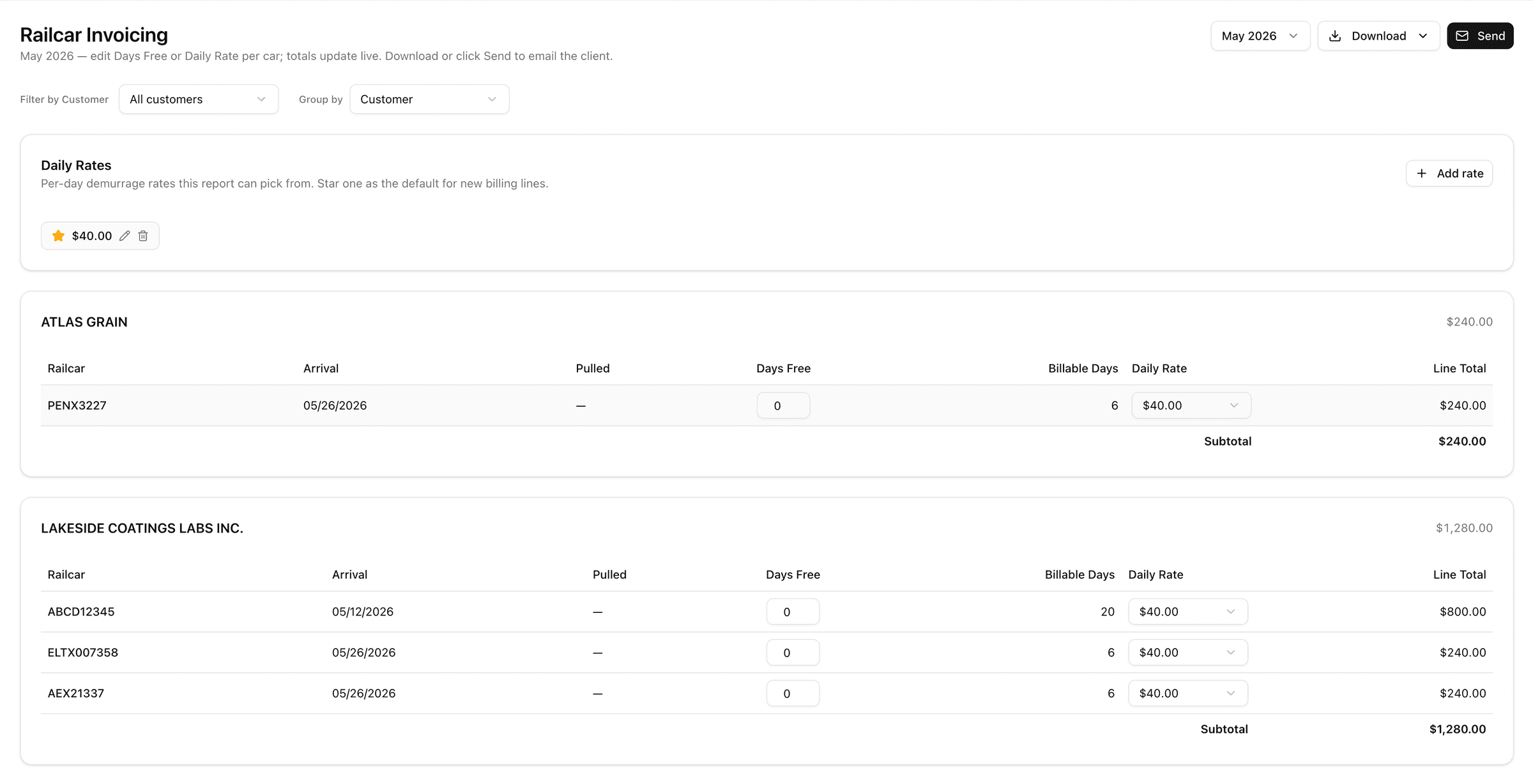
Transfers, demurrage, services, and repairs are already line items. Invoicing reads the operating record instead of chasing it.
Solutions
Solve the problems slowing your operation down.
Start with the bottleneck. Each one pulls in the products that fix it.
Industries
Wherever bulk moves, Rebulk runs it.
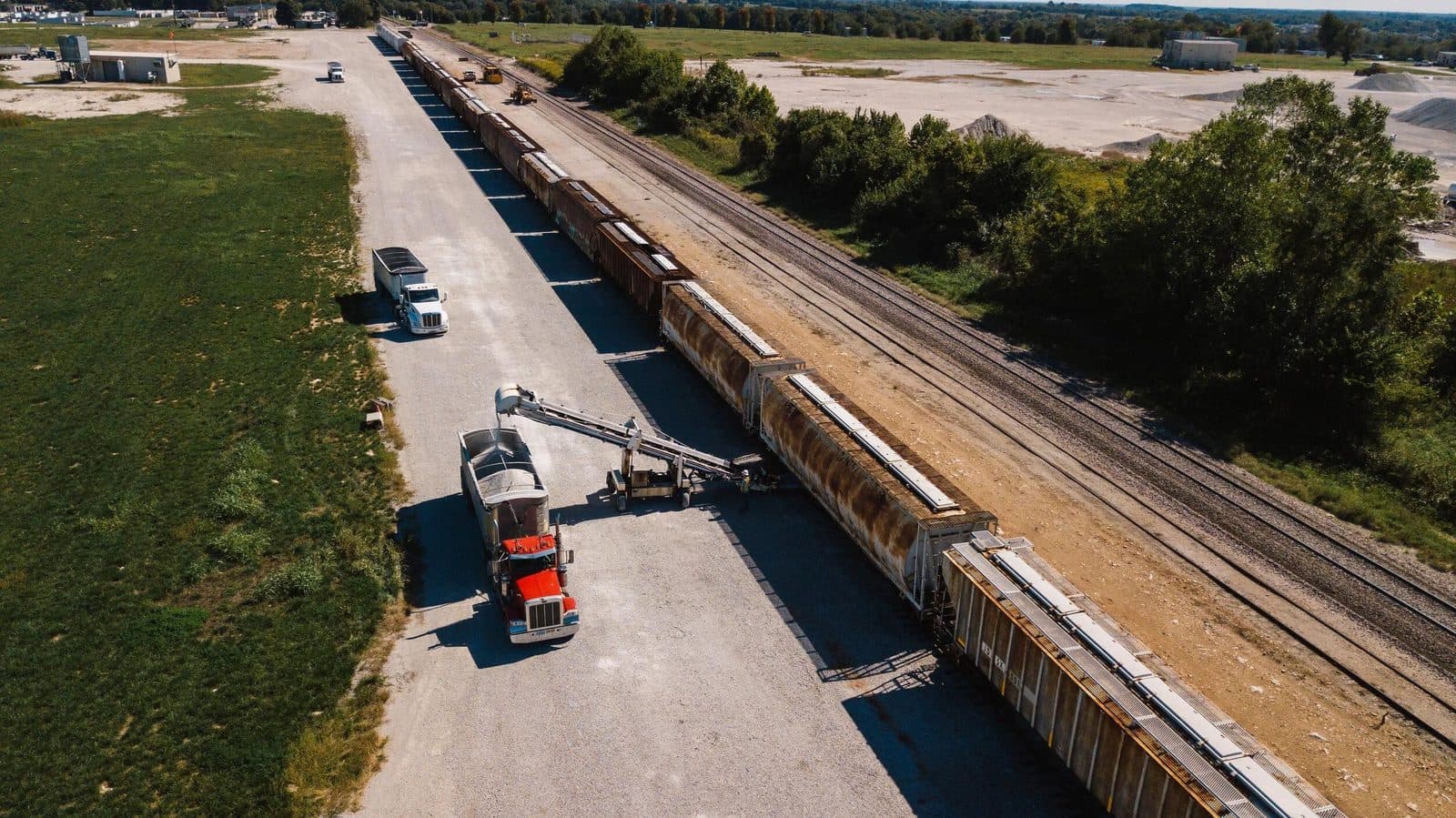
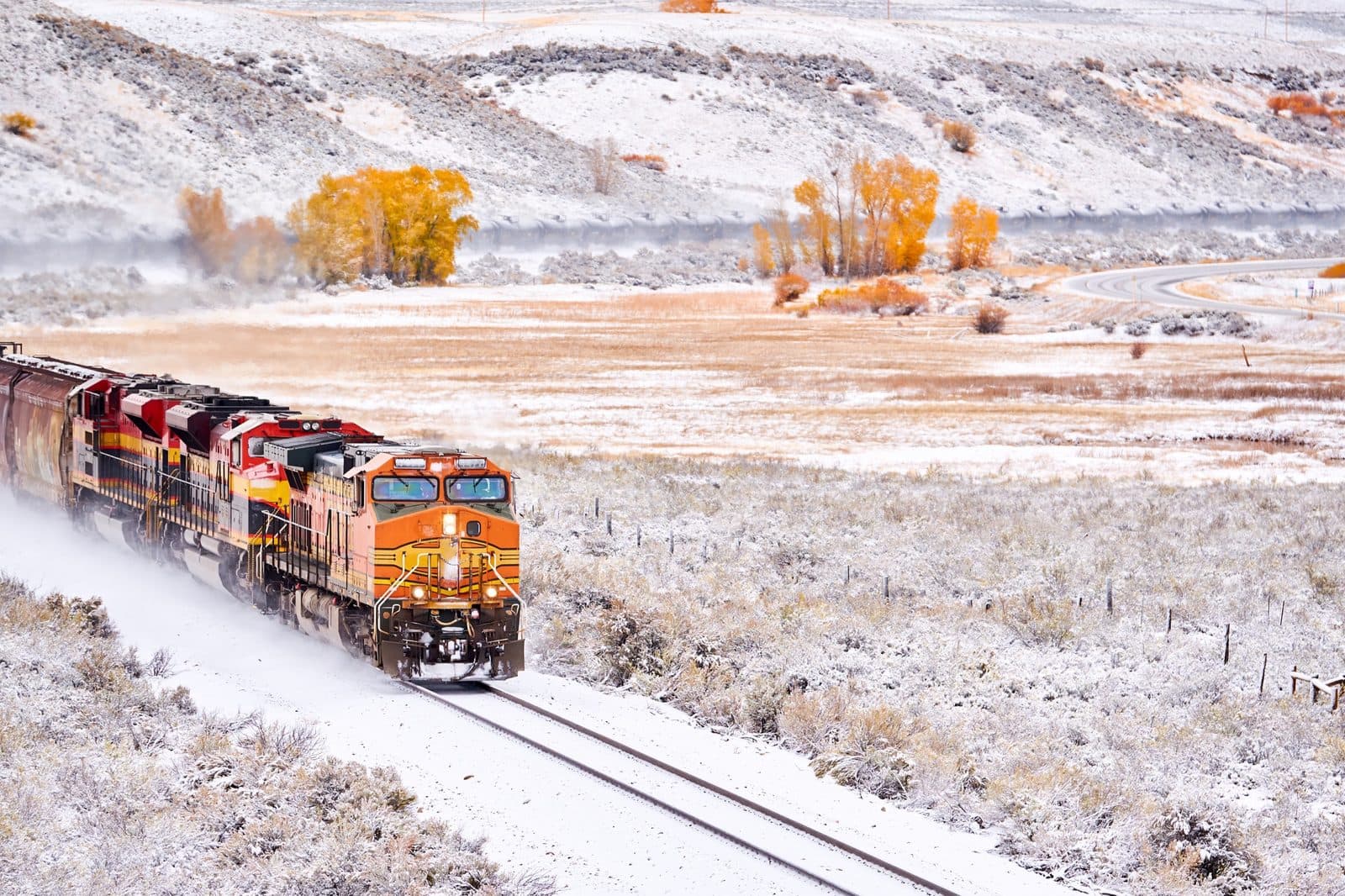
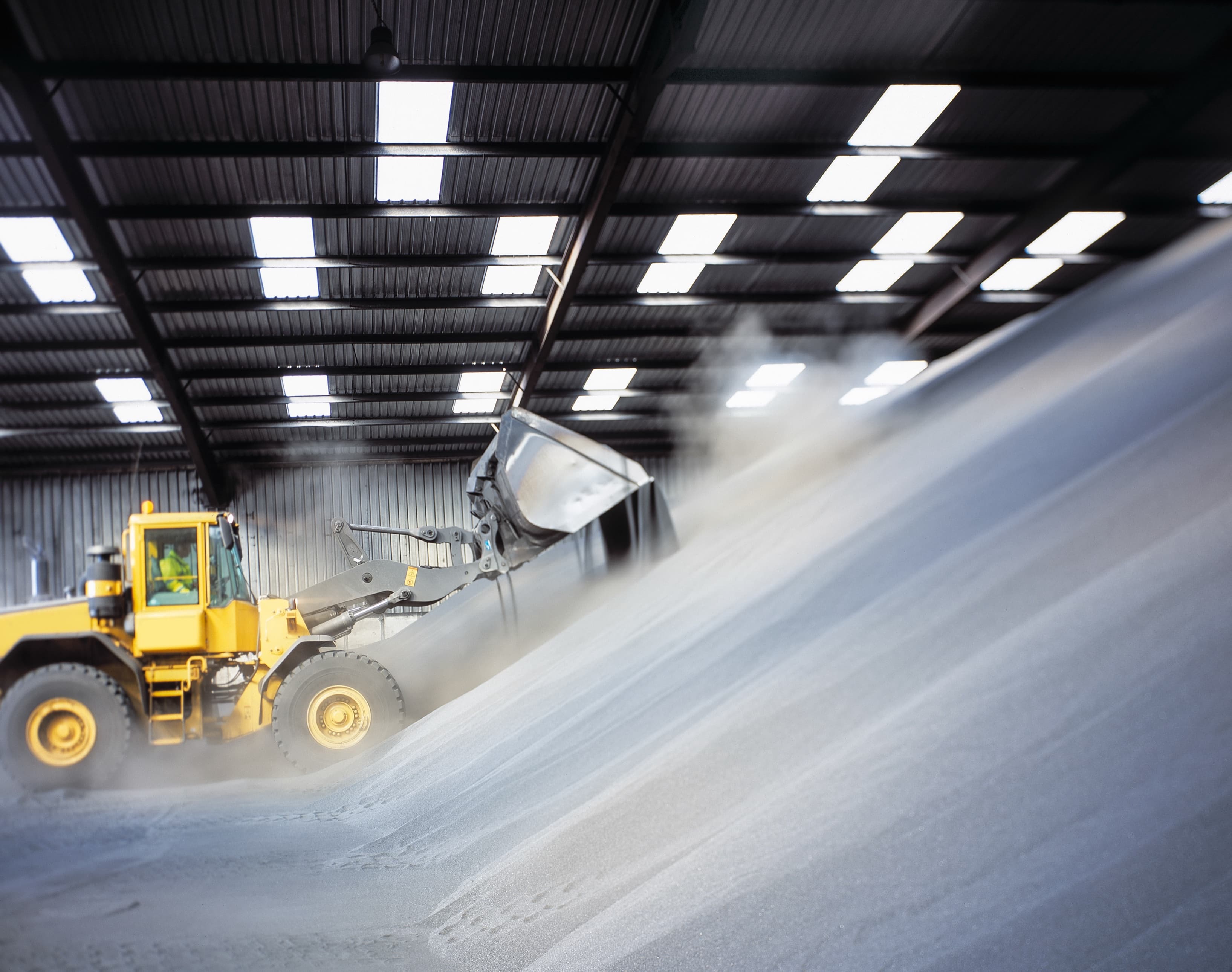
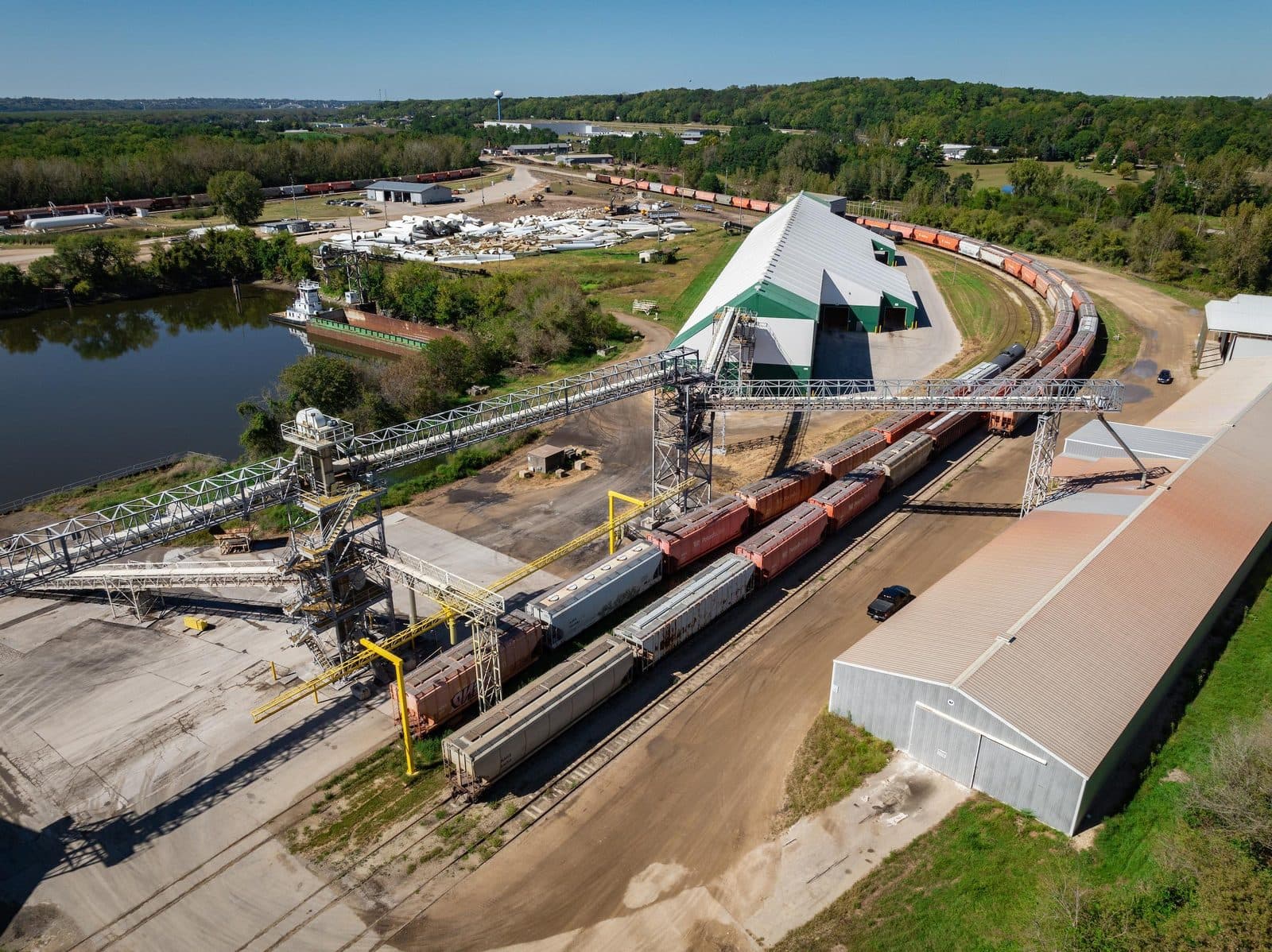
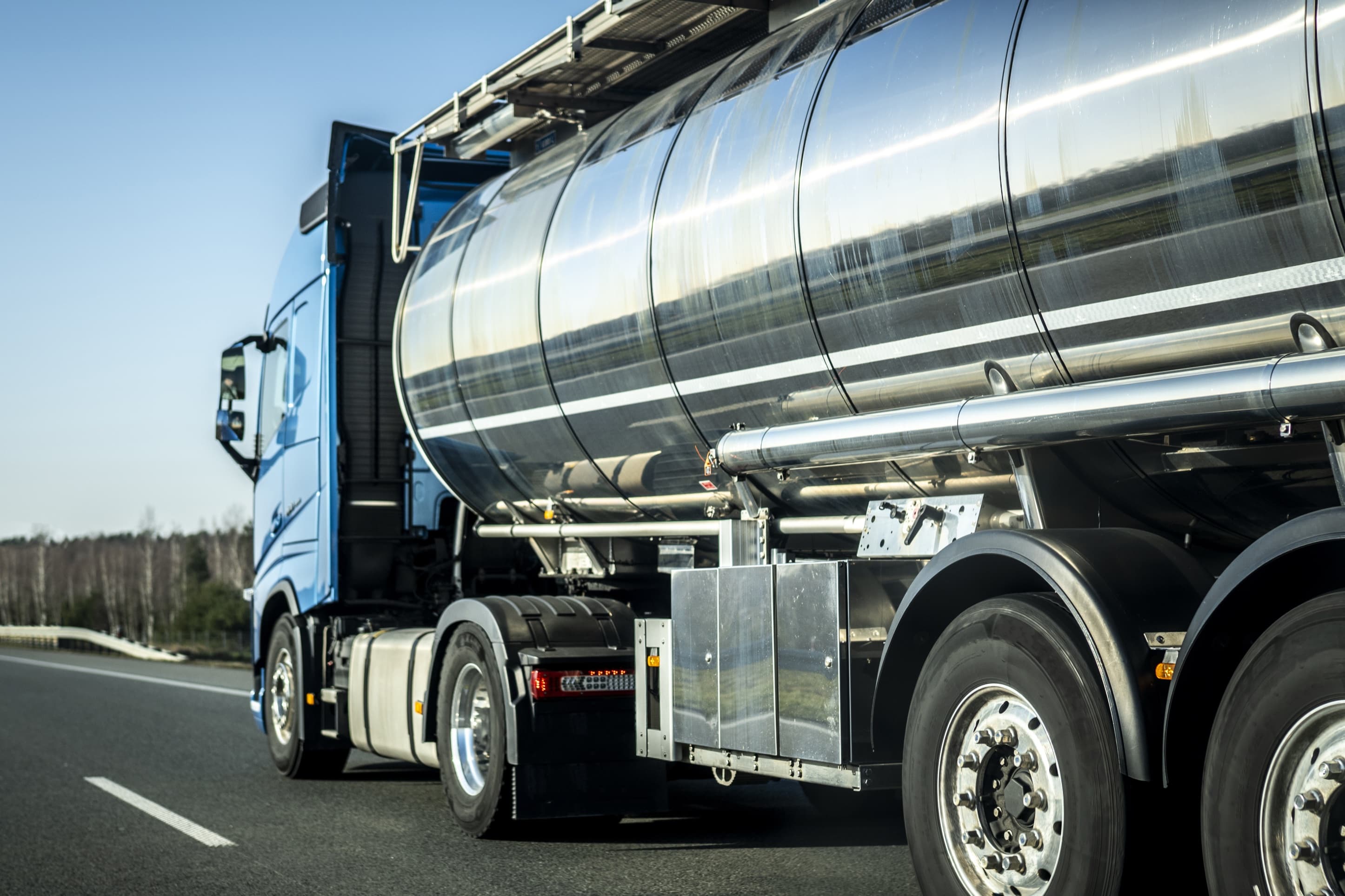
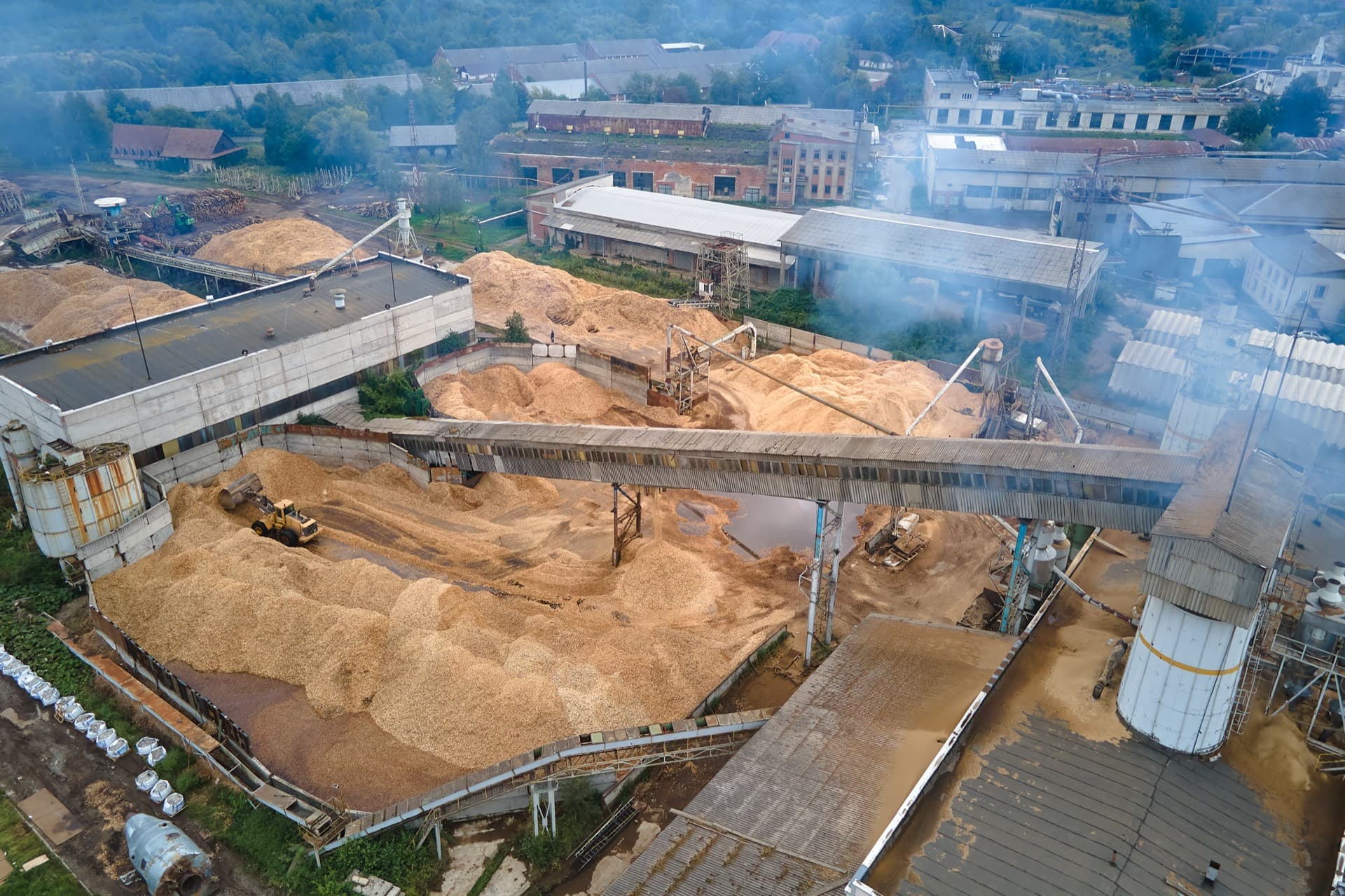
Terminals, railroads, repair shops, shippers, carriers, and plants all touch the same railcar. Rebulk is set up around the part of it you run.
The product
See the operation. Not another spreadsheet.
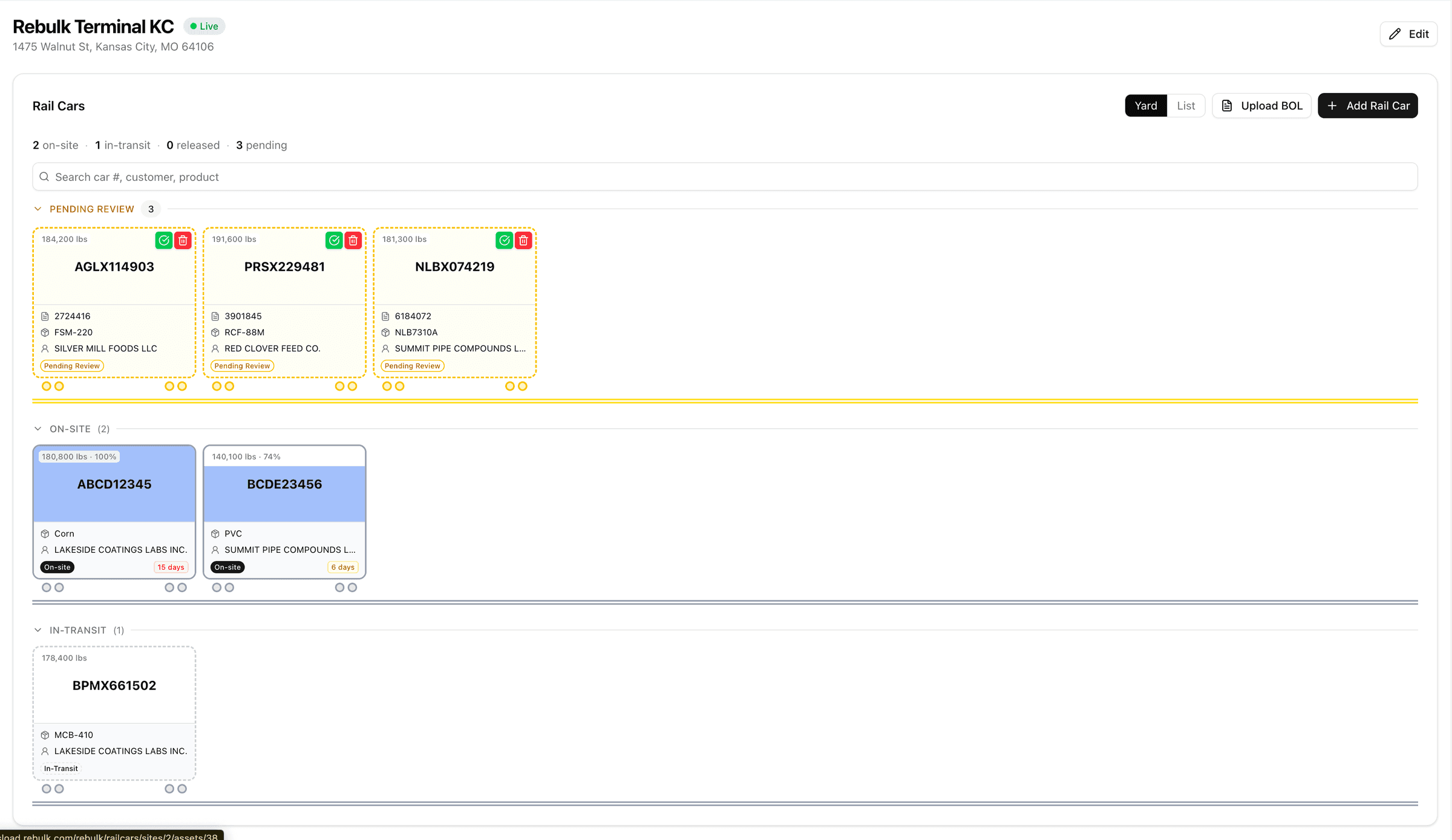
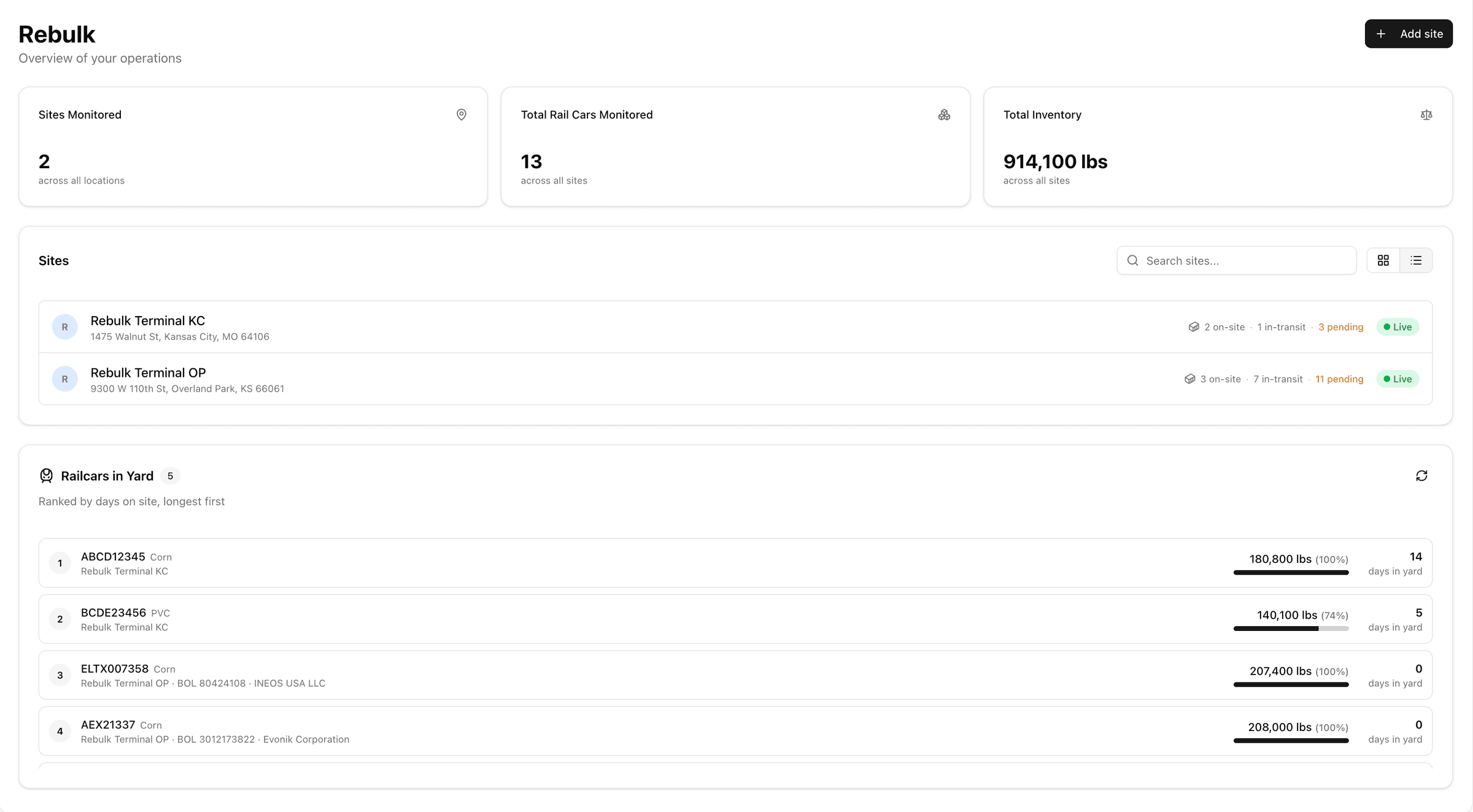
Screens from a live Rebulk terminal: cars on the ground, cars in transit, measured inventory, and the charges that come out of the work.
Customer story
Usher Transport runs rail and transload on one record.
Family-owned since 1946, Usher hauls fuels, chemicals, and hazardous materials with 200+ professional drivers, 400+ trailers, and 51+ safety awards.
01 · Problem
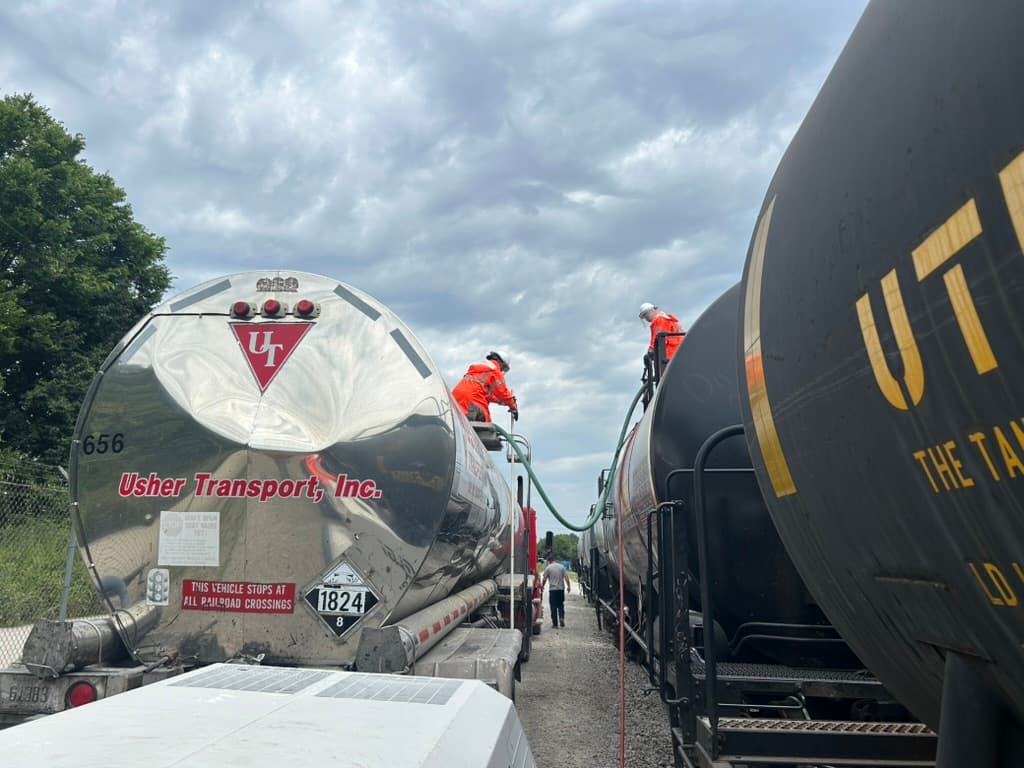
Usher's rail and transload operation moves product between railcars and tank trucks every day — hazmat-rated work where the paperwork matters as much as the pump. Which cars were onsite, what had been transferred, where the documents lived, and what was ready to bill meant phone calls, clipboards, and stacks of paper.
02 · What Rebulk did
The Rebulk team went onsite in Louisville, walked the transload yard, and sat with dispatchers and operators, then set the system up around the way Usher's rail and supply chain team already works.
03 · What changed
Railcars, transfers, inventory, and paperwork live on one record that operations and billing both read from. Documents attach to the car the moment the work happens, and the team has a live view of the yard from any device.
04 · The result
Hours back every week, across operations and billing — time that used to go to chasing updates, copying numbers off paper, and hunting down documents.
“Rebulk gives us hours back every single week. What used to take phone calls and stacks of paper now takes seconds.”Read the full Usher Transport story
Your operation shouldn't run on spreadsheets.
See what running it on Rebulk looks like.
Pick a time right here — 30 minutes with a founder.