
Industries
Bulk Terminals
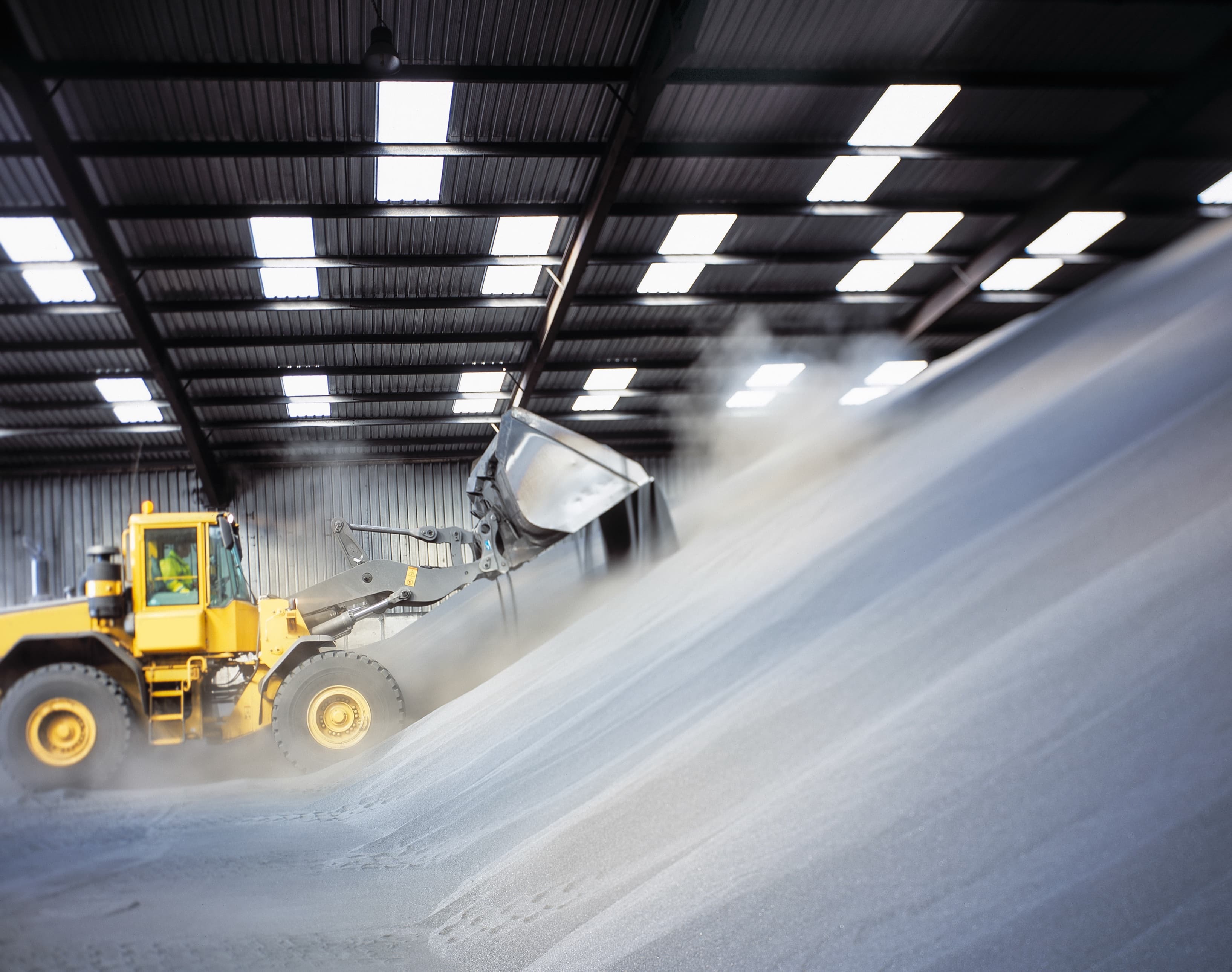
Storage and handling facilities for dry and liquid bulk. Material comes in by rail and truck, sits in piles, silos, and tanks under somebody else's name, and goes back out again. Rebulk keeps one record of what arrived, what is on hand, what left, and what to bill.
The Operation
Material in, material out, and everything in between
A bulk terminal is a receiving operation, a storage yard, a handling operation, and a billing department sharing the same fence line.
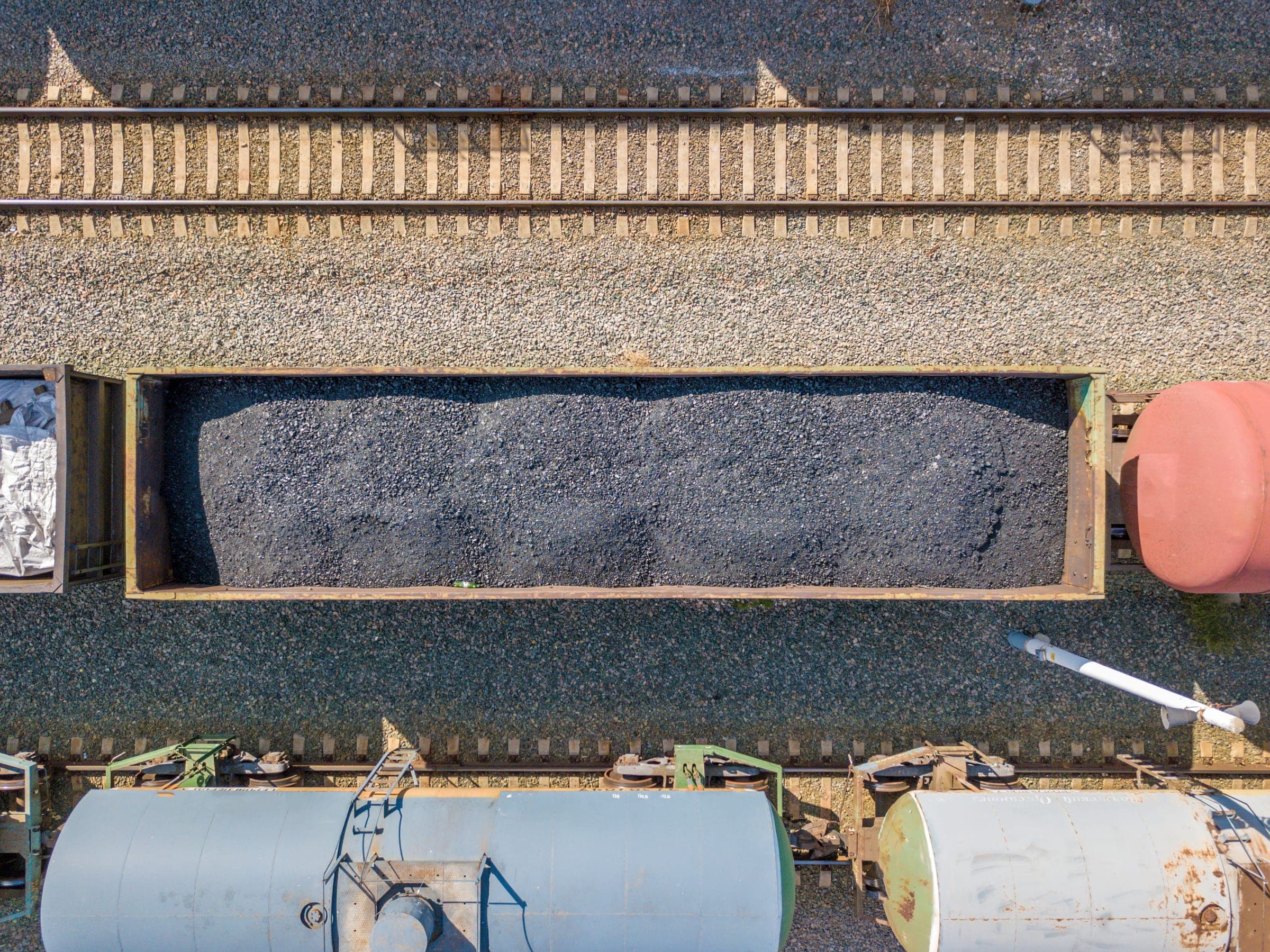
- Inbound arrives as cuts of cars and truckloads, usually against orders somebody else wrote.
- Product sits in open piles, pads, bays, domes, silos, and tanks, often several commodities and several owners on one site.
- Loaders, conveyors, pumps, and transfer lines move material between rail, storage, and truck all day.
- Weights come off truck scales on one side and waybills on the other, and a physical count settles the difference.
- Most of what is on the ground belongs to a customer who wants to know what is theirs.
- Throughput, storage days, demurrage, and handling all have to turn into an invoice at month-end.
The Operational Challenge
The terminal knows what happened. The systems don't.
The work gets done on the ground and then has to be reassembled in four places before anyone can bill it or report on it.
Book inventory drifts from the ground
The number in the spreadsheet and the number in the pile or the tank stop agreeing, and nobody knows by how much until a physical count weeks later. Storage billing and customer balances ride on that gap.
Rail and truck live in different systems
Inbound cars on a whiteboard, trucks in the scale system, storage in a spreadsheet, documents in email. Reconciling the four is a person's job, and it happens after the fact.
Storage and demurrage get billed from memory
Free time, storage days, and per-car charges get reconstructed at month-end from notes and dates. What nobody wrote down never makes it onto an invoice, and what a railroad bills you is hard to dispute.
Customer reporting is a weekly rebuild
The same balances get pulled into a spreadsheet and emailed out every week, and the phone still rings asking where a car is and how much is on the ground.
The Workflow
From the inbound car to the invoice
One pass through the terminal, with the record built as the work happens instead of after it.
- Step 1
Inbound lands on the record
Railcars and trucks are logged with commodity, customer, weight, and paperwork as they arrive. OCR document scanning reads waybills and BOLs so the data entry is not yours.
- Step 2
Product goes to a location
Every receipt lands in a specific pile, bay, silo, or tank, tied to the commodity and the customer who owns it.
- Step 3
Movements are recorded as they happen
Transfers between railcar, storage, and trailer are captured on the floor instead of reconstructed from tickets later.
- Step 4
Inventory is measured, not estimated
Continuous, drone, and mobile capture measures what is actually in the pile, so the book and the ground agree without shutting down for a count.
- Step 5
Outbound closes out with its documents
Outbound BOLs, scale tickets, and shipment records come from completed activity rather than being rebuilt by hand.
- Step 6
Customers see their own product
Each customer gets their inventory, car status, and documents without calling, and scheduled reports go out on their own.
- Step 7
The month closes from work already tracked
Throughput, storage days, demurrage, and handling are line items by the time you invoice. Month-end is review and send.
What is dwell costing across your terminal? Estimate per-car demurrage against your free time and daily rates with the free rail demurrage calculator.
The Products
What a bulk terminal runs on
Transload runs the terminal. Add measured inventory and yard planning as the site grows into them, and every product reads and writes the same operating record.
Terminals on Rebulk are also listed in the transload facility directory, where shippers looking for capacity can find you.
Product UI
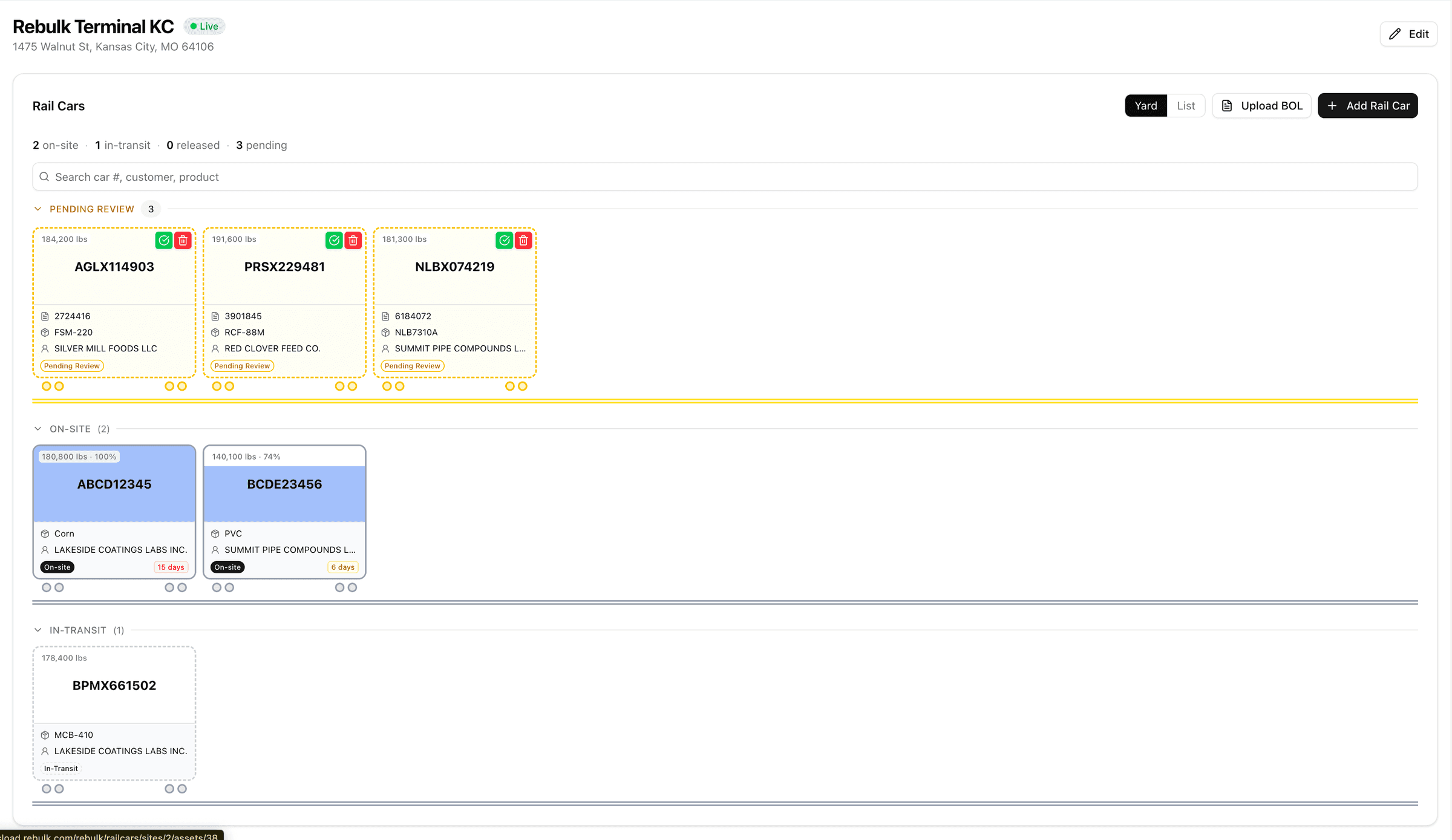
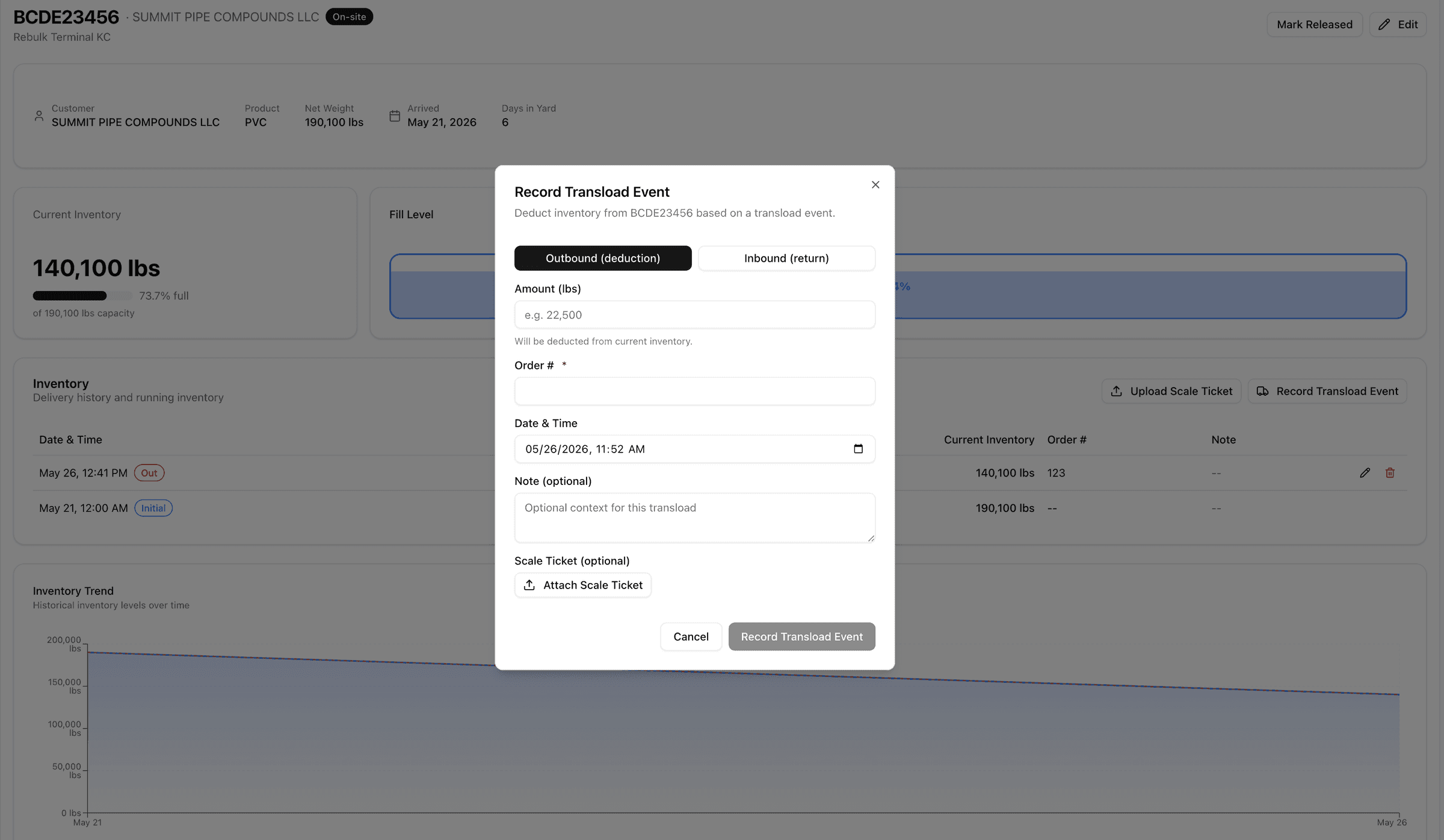
See the terminal, not another spreadsheet
The same record your crew works in is the one your customers and your billing team read from.
Customer Proof
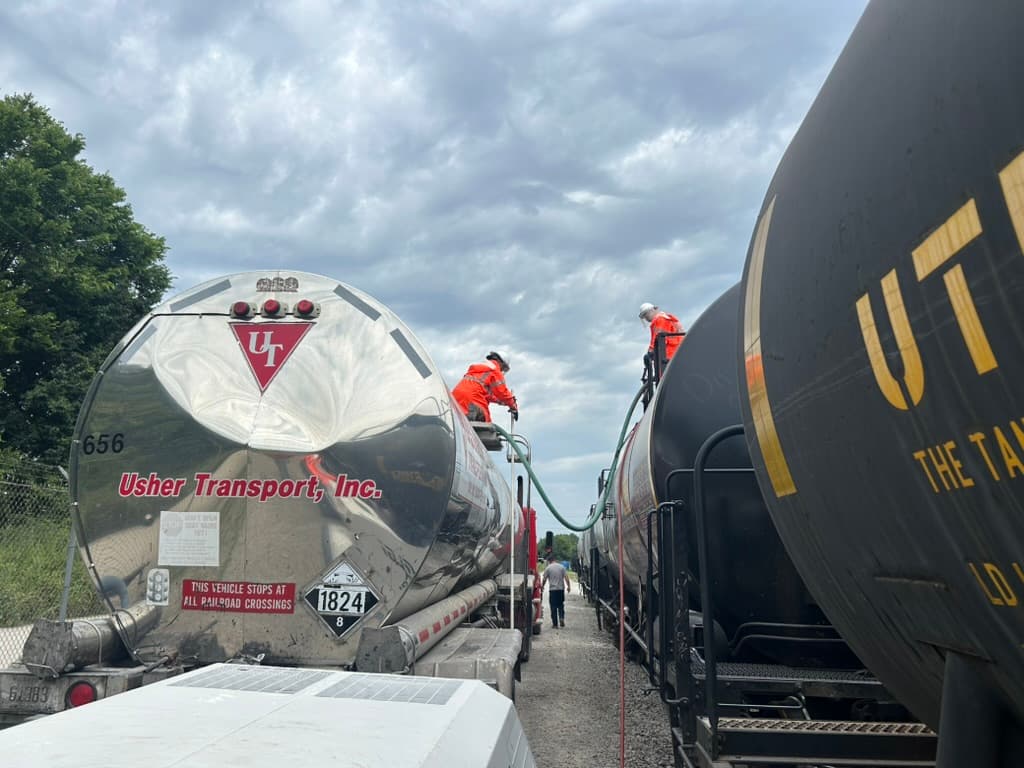
Usher Transport runs rail and transload on Rebulk
Family-owned since 1946, Usher hauls fuels, chemicals, and hazardous materials with 200+ professional drivers and 400+ trailers. Its rail and transload operation now runs on one record: railcars, transfers, inventory, and paperwork that operations and billing both read from.
Read the Usher Transport story“Rebulk gives us hours back every single week. What used to take phone calls and stacks of paper now takes seconds.”
Run the terminal on one record
Dry or liquid, one site or a network: walk us through how material moves through your terminal today and we'll show you Rebulk set up around it, from the inbound car to the customer report.