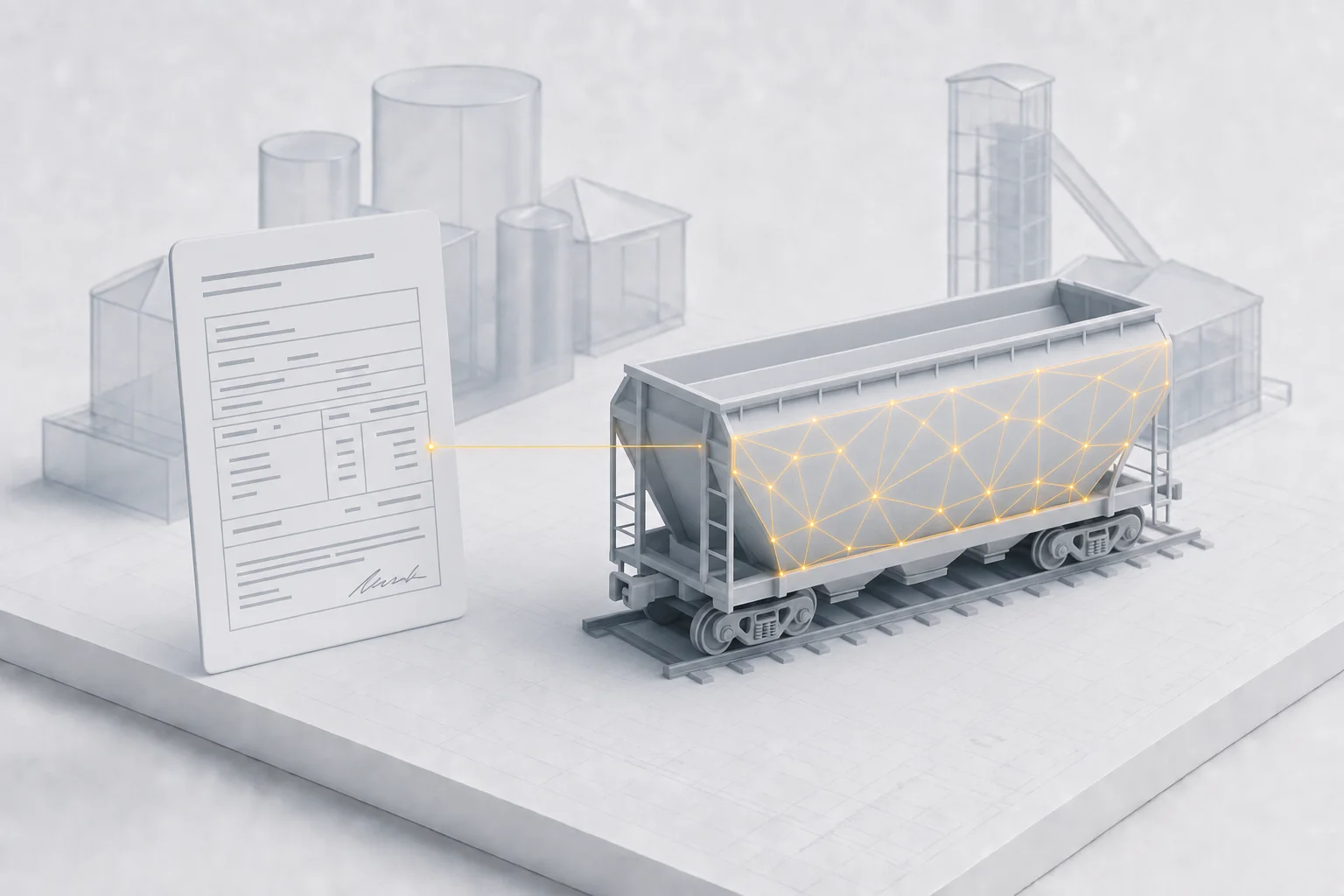
The short answer: A bill of lading (BOL or B/L) is a legal document a carrier issues to a shipper that lists the type, quantity, condition, and destination of the goods being moved. It does three jobs at once: a receipt for the freight, a contract of carriage that sets the terms, and, when it is negotiable, a document of title to the goods themselves.
The one-line definition
A bill of lading is the document that travels with a shipment and proves three things: that the carrier received the goods, on what terms it agreed to carry them, and who has the right to claim them at the other end. It is one of the oldest documents in trade and still the backbone of freight, whether the load moves by ship, rail, or truck.
Those three jobs are worth naming, because most of the confusion around bills of lading comes from treating them as one thing:
- Receipt of goods. The carrier acknowledges it took the freight in the stated quantity and condition at pickup. If the BOL says twenty pallets in good order, that is what the carrier is on the hook to deliver.
- Contract of carriage. The BOL sets the terms between shipper and carrier: liability limits, obligations, and freight terms such as prepaid or collect.
- Document of title. A negotiable bill of lading is evidence of ownership, and it can transfer that ownership while the goods are in transit by endorsement. This is the function people most often get wrong, so it is worth being precise: only an order, or negotiable, BOL carries title. A straight BOL and a sea waybill do not.
The main types of bill of lading
The type of BOL is really a question of two things: who can claim the goods, and how many parties the document covers.
- Straight bill of lading. Non-negotiable. The goods are consigned to one named party, and only that party can take delivery. This is the common case for domestic and prepaid moves, and it is what our bill of lading generator produces.
- Order, or negotiable, bill of lading. Made out "to the order of" a party, so title can pass by endorsement while the freight is still moving. Used when payment is not yet settled, such as under a letter of credit.
- Master and house bills of lading. A master BOL is issued by the actual carrier for a whole consolidated load. A house BOL is issued by a freight forwarder or consolidator to each underlying shipper inside that consolidation.
- Through bill of lading. One document that covers a shipment across multiple carriers or modes end to end, which is why it comes up in transload and intermodal moves.
- Clean vs claused. A clean BOL means the carrier noted no exception at receipt. A claused, or "foul," BOL means the carrier recorded an exception. That exception is any discrepancy noted at pickup, a shortage or a bad count or damaged packaging, not necessarily physical damage, and banks routinely reject claused bills under a letter of credit.
What's on a bill of lading
Formats vary by carrier and mode, but a bill of lading carries a consistent core set of fields:
- BOL number, the unique reference the carrier assigns so everyone can track the shipment
- Ship date
- Shipper (consignor), the full legal name and origin address
- Consignee, the full legal name and delivery address
- Carrier name, plus the SCAC code on rail and LTL freight
- Notify party, a third party to alert on arrival, common on order bills
- Description of the goods, the commodity being shipped
- Quantity, handling-unit count, and packaging type
- Weight, and dimensions where they apply
- Freight class and NMFC item number on LTL, which drive the rate
- Special instructions, accessorials, and hazmat details such as UN number and class
- Freight terms, prepaid or collect, and any declared value
- Signatures and dates, from the carrier and shipper at pickup and the consignee at delivery
Bill of lading vs the other shipping documents
A bill of lading is one of several documents that ride along with a shipment, and they get mixed up constantly. The quickest way to keep them straight is to ask who issues each one and what job it does:
| Document | Issued by | What it does | Transfers ownership? |
|---|---|---|---|
| Bill of lading | Carrier | Receipt, contract of carriage, and title | Only if it is a negotiable BOL |
| Waybill | Carrier (on rail, the railroad) | Evidences carriage and settles the move | No |
| Commercial invoice | Seller or shipper | Requests payment for the goods | No |
| Packing list | Seller or shipper | Itemizes what is in the shipment | No |
| Scale ticket | The scale operator or terminal | An independent record of weight | No |
The distinction that matters most for a rail-served terminal is the first two rows. A bill of lading is the shipper's instruction and receipt. A waybill is the document the railroad generates to actually move and settle the car, and it is non-negotiable, so it never carries title. They describe the same shipment, and their numbers have to agree, but they are not the same piece of paper.
How a bill of lading drives billing at a bulk terminal
At a transload or rail-served terminal, the bill of lading is not the end of the paperwork. It is the first edge of a reconciliation that runs through the whole month.
Here is the chain a single railcar of bulk product sets off. An inbound car arrives with a bill of lading and generates a railroad waybill. The terminal weighs the product and cuts a scale ticket, which is a separate weight record from the BOL. If the car sits past its free time, it accrues demurrage, charged per car, per day. When the product leaves, an outbound load gets its own scale ticket and its own bill of lading. At month-end, the terminal has to turn that stack into one invoice per customer.
The trouble is that none of those documents agree on their own. The BOL weight, the waybill weight, and the scale-ticket weight can all differ, and the invoice keys off one of them. Bills of lading show up in dozens of formats, some of them handwritten, and each has to be matched to the right car and customer by hand. Every manual re-key is a chance to transpose a weight or a car number, and every renumbered ticket is a chance to orphan a charge or bill it twice. A terminal that runs several customers and several commodities on the same tracks is reconciling bill of lading against waybill against scale ticket against demurrage against invoice, on paper, under dispute pressure, at exactly the moment the money is due.
One record from the bill of lading to the invoice
This is the problem the Transload Operating System was built for. Inbound bills of lading are ingested automatically: each document is read as it arrives and attached to the right railcar, customer, and material on its own, so the data entry stops being someone's full-time job and the transcription errors stop with it. The railcar is tracked from arrival to release, with demurrage accruing per car as it sits. Scale tickets tie the weights to the movements, and the measured material in the yard stays live per customer. When it is time to bill, the invoice comes straight from work already recorded, with the bill of lading, the weight, and the demurrage already reconciled to a single source of truth instead of rebuilt from a stack of paper.
That reconciliation is what a working bulk transloader needs most, because the bill of lading was never really the hard part. Reading it once, tying it to the car and the weight and the customer, and having it still agree at month-end is. That is the part we make trackable.
If you just need to create one, the free bill of lading generator prints a clean straight BOL in your browser, with nothing uploaded and nothing stored.
Frequently asked questions
Who issues a bill of lading?
The carrier, or its agent or driver, issues the bill of lading to the shipper. For motor freight it is a legal obligation rather than a courtesy: a carrier must issue a bill of lading on the shipper's request. The shipper prepares the shipping details, and the carrier issues and signs the document that governs the move.
Who signs a bill of lading?
The carrier and the shipper, or their agents, sign at pickup to confirm the goods were tendered and received. The consignee signs at delivery to acknowledge receipt of the freight. Those signatures are what turn the bill of lading into proof that each handoff happened.
What is the difference between a bill of lading and an invoice?
The carrier issues the bill of lading, which is the receipt and contract for moving the shipment. The seller issues the commercial invoice, which is the request for payment for the goods themselves. Different parties issue them, and they answer different questions: one is about the carriage, the other is about the money.
What is the difference between a bill of lading and a waybill?
A waybill evidences that a carrier received and is moving the goods, but a waybill is non-negotiable and is not a document of title, so it cannot be used to transfer ownership in transit. A negotiable bill of lading can. On rail, the shipper's bill of lading is the instruction, and the railroad's waybill is the document that settles the move.
What is a bill of lading number?
A bill of lading number is the unique reference the carrier assigns to a shipment so the shipper, carrier, and consignee can track and match it across every document in the chain. At a terminal, that number is how a bill of lading gets tied back to the right railcar, scale ticket, and invoice.
What is the difference between a consignee and a shipper?
The shipper, or consignor, is the party sending the freight and arranging the shipment. The consignee is the party receiving it at the destination, and ownership transfers to the consignee when the goods are released. The bill of lading names both, so there is no question who tendered the goods and who is entitled to claim them.
Run your bulk terminal on one platform
Whether you need to measure inventory, track railcars, process paperwork, or bill customers, Rebulk gives your team one operating record that runs from the work performed to the invoice, set up around how you already work.
Related
All postsTransload Operating System
Ingest every BOL automatically and tie each railcar to its material, weight, and billing on one record
Free ToolBill of Lading Generator
Create and print a clean straight bill of lading in your browser, nothing stored
GuideDemurrage vs Detention
The per-day charges that reconcile against the bill of lading at month-end